Humidity Control in Wine Cellars and Barrel Rooms

Maintaining the right wine cellar temperature and humidity control is essential to protect wine quality, preserve aromas, and ensure proper aging. TrueMist, is a trusted installer and provider of humidity control systems for wine cellars, barrel rooms, and storage facilities. Our advanced solutions help maintain stable storage conditions, protect barrels and corks, and safeguard long-term investments in wine production and preservation.

Why Humidity Matters

Prevent Cork Drying:Corks that dry out allow oxygen to penetrate the bottle, leading to premature aging and off-flavors. Proper humidity levels help keep corks moist, preserving the wine’s integrity.
Minimize Evaporation: In barrel rooms, wine loss due to evaporation—known as the “angel’s share”—can be costly. Proper humidity control for wine barrel storage minimizes evaporation and protects valuable stock.
Protect Barrel Integrity:Wooden barrels are susceptible to cracking or warping when exposed to dry conditions. A reliable barrel room humidity control system maintains wood stability and extends barrel lifespan.
Preserve Flavor Profiles:Sudden fluctuations in humidity and temperature can alter wine’s delicate balance of flavors and aromas. Stable conditions allow the wine to age gracefully and develop its intended profile

Features of an Automatic Wine Cellar Humidity Control System

Real-Time Monitoring

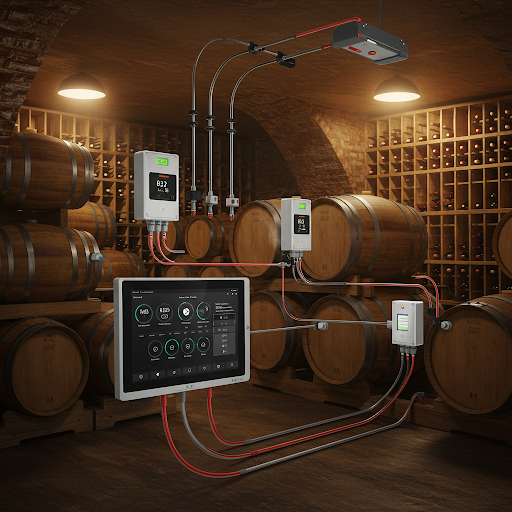
Advanced sensors track humidity and temperature around the clock, providing wine room temperature and humidity control.

Automated Regulation

Smart wine cellar humidity control systems react instantly when humidity deviates from the set range, adjusting misting levels or ventilation to bring conditions back into balance.

Even Distribution

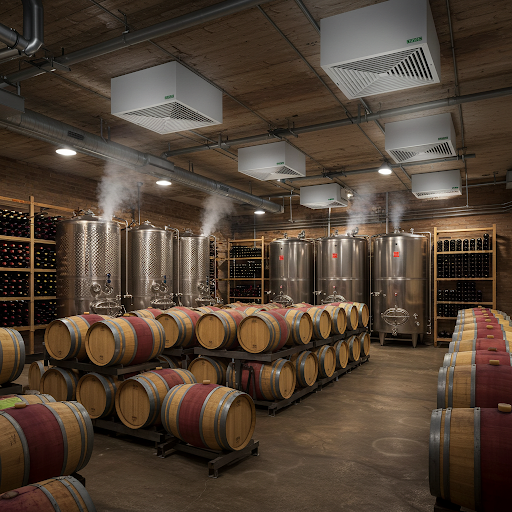
Strategically placed nozzles or humidifiers ensure that moisture is evenly spread throughout the space, preventing localized dry spots.

Energy Efficiency

Automated controls and modern misting or humidification technology help optimize water and energy usage, operating only when necessary.

Scalable Designs

Whether you run a boutique winery or manage multiple barrel rooms, humidity control systems can be customized to meet your facility’s unique size and layout.

How Wine Room Humidity Control System Works

Continuous Data Collection

Sensors capture humidity and temperature readings in real time, relaying that data to a central control unit.

Smart Feedback Loop

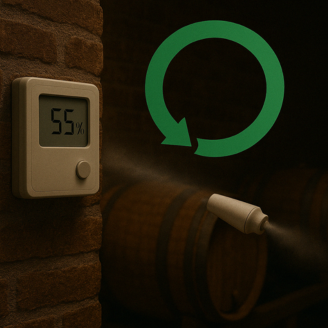
When the system detects conditions outside the ideal thresholds, it activates misting or humidification to restore balance. Once conditions normalize, the system automatically stops, conserving resources.

Uniform Coverage

The finely distributed mist gently settles without causing excessive moisture in any single area, preventing mold or water damage.

Automated Adjustments

The system continually fine-tunes based on sensor data, ensuring humidity levels remain steady, even when external factors like weather or facility usage change.

Benefits of Humidity Control in Wine Cellars and Barrel Rooms

Elevated Wine Quality

Consistent humidity ensures your wines age correctly and reach their full potential in taste, aroma, and mouthfeel.

Reduced Product Loss

By minimizing evaporation, you retain more wine, improving profitability—especially critical for high-value vintages.

Enhanced Barrel Longevity

A stable environment reduces the risk of barrel damage, helping you get the most out of each barrel over its lifespan.

Lower Operating Costs

Automated systems optimize resource consumption, cutting down on water and energy usage while minimizing labor costs.

Peace of Mind

Real-time monitoring and automated controls mean you can focus on crafting exceptional wines without the stress of constant manual checks.

Applications of Humidity Control in Wine Cellars and Barrel Rooms

Underground Cellars:Traditional cellars often have natural humidity levels, but additional control may be needed to fine-tune conditions for high-end collections.
Barrel Rooms:Especially crucial for large operations where even minor losses from evaporation can translate into significant cost impacts over time.
Wine Storage Facilities:Commercial or shared storage spaces benefit from stable humidity to protect diverse collections and customer investments.
Tasting Rooms:Extend ideal conditions to areas where wines are displayed and served, preserving taste and ensuring a memorable guest experience.

Why Choose Truemist for Wine Room Humidification?

Specialists in wine cellar environments

We design and deliver solutions specifically for humidity control in wine cellars and barrel rooms, so storage conditions stay stable for aging and long-term preservation.

Custom-built for your wine room layout

Every wine room humidity control system is engineered based on room size, airflow, storage density, and barrel/bottle zones—so performance is consistent across the full space.

Service support and maintenance guidance

We provide operating guidance, periodic service options, and maintenance support to keep performance stable season after season.

Provider + Installer (end-to-end delivery)

TrueMist is not just a seller—we are a complete provider and installer. We handle site assessment, system design, installation, testing, and after-sales support.

Automatic humidity control with real-time monitoring

Our automatic wine cellar humidity control system uses sensors and smart controls to maintain setpoints automatically, reducing manual checks and human error.

FAQs – Wine Cellar Temperature and Humidity Control

What is the ideal humidity level for a wine cellar?

Most wine storage guidelines recommend 50%–70% RH, with around 60% RH commonly cited as ideal for protecting corks and bottle integrity.

What temperature should a wine cellar be kept at?

A widely referenced target is around 55°F (≈13°C), with the key goal being stable temperature over time rather than frequent swings.

What happens if wine cellar humidity is too low?

Low humidity can dry out corks, allowing oxygen to enter the bottle and risking oxidation or premature aging.

What happens if wine room humidity is too high?

High humidity can lead to mold/mildew on labels and corks, label peeling, musty odors, and even damage to wooden racks/finishes.

What is the recommended humidity for barrel room humidity control?

Barrel rooms often run higher humidity than bottle storage to reduce evaporation (“angel’s share”). Many references discuss targets around 70% RH (sometimes higher ranges are used depending on operations and goals).

Can humidification cause mold in wine storage cellars?

It can if humidity is kept too high for too long. Proper systems prevent this by maintaining setpoints and avoiding sustained high RH where mold risk increases.

How do I know if my wine cellar humidity control system is needed (or not working)?

Common warning signs include dry/loose corks, peeling or damp labels, mold/mildew, musty smell, or condensation on surfaces.

Do I need both wine room humidification and cooling?

Yes—wine storage performance depends on both temperature and humidity working together, especially in modern “wine rooms” that don’t have naturally stable underground conditions.

What type of humidification is best for wine rooms—mist or a standard humidifier?

For larger wine rooms/barrel areas, many facilities prefer automated, sensor-controlled systems that hold a stable setpoint and distribute humidity evenly (instead of small portable units that fluctuate).

© 2026 All Rights Reserved | Truemist Misting and Fogging System | EKA HR Consulting Private Limted

exit
linkedin facebook pinterest youtube rss twitter instagram facebook-blank rss-blank linkedin-blank pinterest youtube twitter instagram