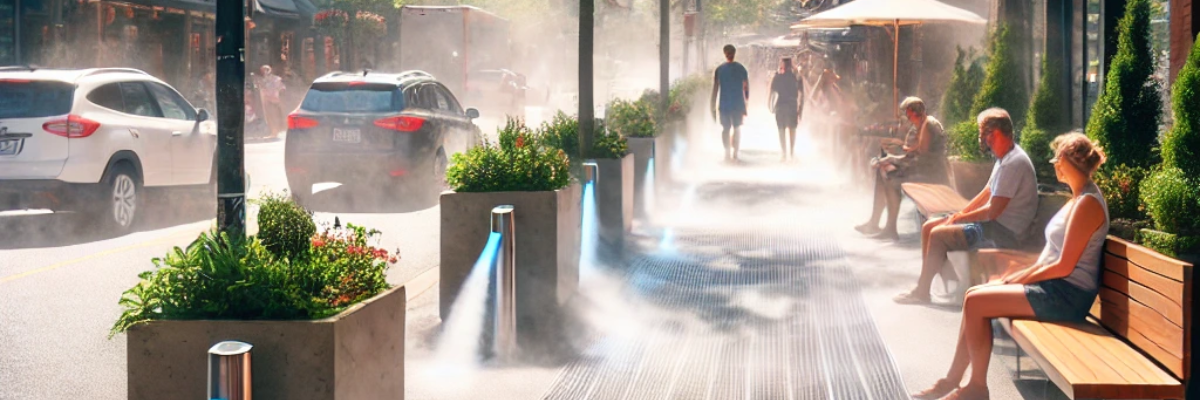
Outdoor mist cooling systems can play a significant role in cooling streets and public spaces, especially in urban areas where heat is intensified due to concrete surfaces and limited vegetation. These systems can reduce the "urban heat island" effect, making outdoor environments more comfortable during hot weather.
How Outdoor Mist Cooling Systems Can Help Cool Streets:
Evaporative Cooling:
Misting systems work by releasing ultra-fine water droplets into the air. When these droplets evaporate, they absorb heat from the surrounding air, reducing the temperature of the area. This process, called evaporative cooling, can lower street temperatures by several degrees, making outdoor spaces more pleasant.
Reducing Ambient Temperature:
Streets absorb heat from the sun, especially concrete, asphalt, and building materials, which trap and radiate heat. Misting systems can help cool down these surfaces, reducing the surrounding air temperature and providing relief in densely populated areas.
Strategic Placement of Misting Poles:
Misting poles can be placed along sidewalks, walkways, and public areas like parks, bus stops, or open markets. These poles will disperse mist across a wide area, cooling both pedestrians and the environment.
Integration with Street Furniture:
Misting systems can be integrated into street furniture such as benches, lampposts, or public art installations, enhancing the cooling effect in high-traffic areas without obstructing foot traffic or impacting the city's aesthetic.
Cooling for Outdoor Events and Markets:
During festivals, street markets, or outdoor gatherings, misting systems can be deployed to cool attendees and reduce heat stress. Portable misting fans or mist lines can be set up in public plazas or along vendor areas to enhance comfort.
Energy Efficiency:
Mist cooling systems consume far less energy than air conditioning and do not require enclosed spaces to be effective. They use water and can be powered by solar energy, making them environmentally friendly and cost-effective for long-term street cooling.
Improving Air Quality:
Misting systems help reduce dust, pollen, and other airborne particles by settling them with the fine mist. This not only cools the streets but also improves air quality for pedestrians.
Urban Heat Island Mitigation:
Cities are known to experience higher temperatures due to buildings, roads, and lack of green spaces (known as the "urban heat island" effect). Misting systems can help combat this by cooling outdoor areas and creating more thermally comfortable urban spaces.
Key Benefits of Mist Cooling for Streets:
Enhanced Comfort:
Pedestrians and outdoor workers can benefit from lower temperatures, making streets more walkable during hot weather.
Public Health:
Misting systems can reduce heat-related illnesses like heatstroke by providing a cooling environment for people, especially in urban areas with high pedestrian traffic.
Eco-friendly Cooling:
These systems rely on evaporative cooling, which is more energy-efficient and sustainable compared to air conditioning or other artificial cooling methods.
Promoting Outdoor Activities:
Cooler streets encourage more outdoor activities, enhancing social interaction and business activities in public spaces.
Aesthetic Appeal:
Modern mist cooling systems can be aesthetically integrated into urban design, enhancing the beauty of public spaces without disrupting the flow of city life.
By cooling streets and public areas, misting systems provide an affordable and eco-friendly solution to heat-related challenges in urban environments, improving the quality of life for city dwellers
