Air-cooled chillers play a crucial role in maintaining temperature control in industrial, commercial, and HVAC applications. However, their efficiency can be impacted by high ambient temperatures. One innovative solution to enhance performance is adiabatic mist cooling, which optimizes heat rejection and improves energy efficiency.
How Adiabatic Mist Cooling Works
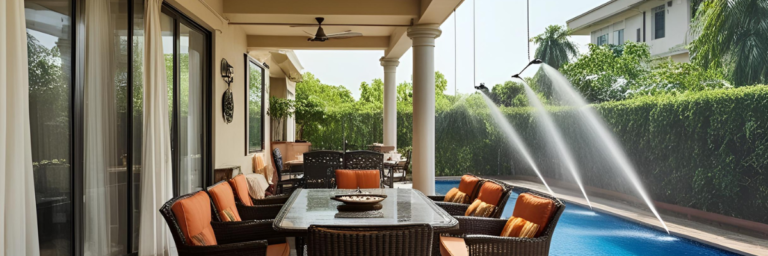
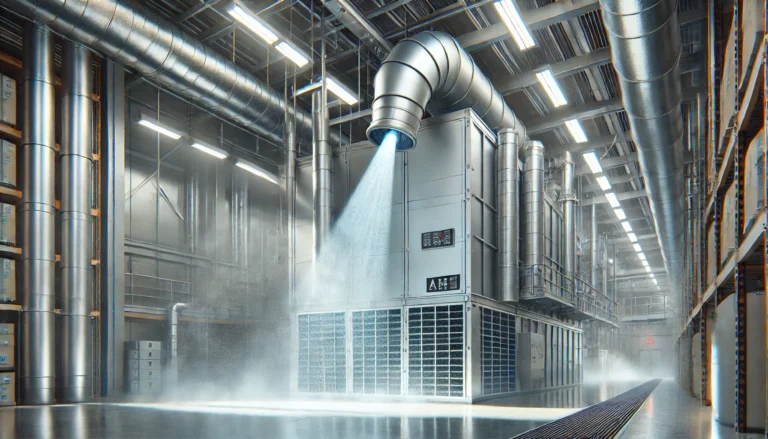
Adiabatic mist cooling involves installing a fine mist of water into the air before it reaches the chiller’s condenser coil. The water mist evaporates, cooling the surrounding air and enhancing heat dissipation. This process helps air-cooled chillers operate more efficiently, especially in high-temperature conditions.
Key Benefits of Adiabatic Mist Cooling Systems
1. Enhanced Heat Transfer Efficiency
The evaporation of water mist cools the air, improving the heat exchange process between the refrigerant and ambient air. This results in more effective heat rejection and reduced strain on the chiller system.
2. Lower Condensing Temperatures
By decreasing the temperature of the air surrounding the condenser coil, the system maintains lower condensing temperatures. This allows the chiller to work more efficiently by reducing the temperature difference between the refrigerant and ambient air.
3. Improved Energy Efficiency & Cost Savings
- Lower condensing temperatures reduce compressor workload, leading to decreased energy consumption.
- Studies show that adiabatic cooling can improve chiller efficiency by 10-30%, depending on the climate and system design.
- Energy savings directly translate into lower operating costs for facilities.
4. Increased Cooling Capacity & Performance
By maintaining optimal heat rejection, adiabatic cooling can increase a chiller’s cooling capacity. This is particularly beneficial in peak load conditions when additional cooling is required.
5. Reduced Impact of High Ambient Temperatures
Air-cooled chillers often struggle with reduced performance in hot environments. Adiabatic cooling lowers the ambient temperature, preventing efficiency loss due to extreme heat.
6. Flexible and Adaptive Operation
- Many adiabatic cooling systems operate only when ambient conditions exceed a certain threshold, optimizing water usage.
- Smart control systems adjust misting levels based on temperature and humidity, ensuring efficient and sustainable operation.
Challenges and Considerations
While adiabatic mist cooling offers numerous advantages, it is important to consider:
- Water Usage: Misting requires water, and excessive use can lead to increased operational costs if not managed properly.
- Maintenance Needs: Regular maintenance is essential to prevent mineral buildup and microbial growth in misting nozzles and piping.
- Climate Suitability: The effectiveness of adiabatic cooling is reduced in high-humidity environments, as the air has less capacity to absorb additional moisture.
Real-World Example: Energy Savings in Industrial Applications
A leading data center in Arizona implemented an adiabatic mist cooling system to enhance chiller performance. The result was a 15% reduction in energy consumption during peak summer months, leading to annual savings of over $200,000.
Comparison: Adiabatic Cooling vs. Traditional Cooling Methods
| Feature | Adiabatic Mist Cooling | Traditional Air-Cooled Chiller |
|---|---|---|
| Cooling Efficiency | High | Moderate |
| Water Usage | Moderate (controlled) | None |
| Energy Savings | Up to 30% | Limited |
| Best Suited For | Hot, dry climates | All climates |