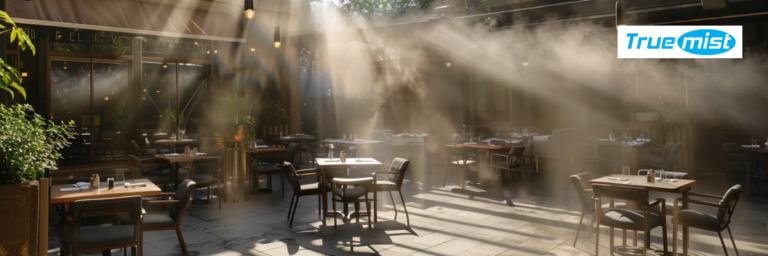
As cities heat up due to climate change and urban congestion, mist cooling systems at traffic signals offer an innovative, eco-friendly way to improve air quality, reduce heat stress, and enhance public comfort. Whether you’re a commuter, pedestrian, or traffic police officer, these systems can transform intersections into refreshing urban oases.
Why Use a Mist Cooling System at Traffic Signals?
Benefit
Description
Ambient Cooling
Reduces surrounding temperature by 5–10°C using evaporative cooling
Pedestrian Comfort
Provides relief for people waiting to cross or in crowded sidewalks
Traffic Police Well-being
Keeps on-duty personnel cool in high heat zones
Pollution Control
Mist helps settle dust and particulate matter (PM2.5/PM10)
Urban Heat Island Mitigation
Cools micro-climate in concrete-heavy intersections
How the System Works: Components & Design
Component
Details
High-Pressure Pump
2–3 HP, 700–1000 psi
Anti-Drip Nozzles
Stainless steel or brass, 10–15 micron mist
Frames or Poles
Mounted on traffic signals, medians, or overhead crossbars
Water Source & Filters
RO/soft water + 5-micron filter to prevent nozzle clogging
Automation Panel
Timer-based, or IoT-integrated with heat/humidity sensors
Solar Power Option
Ideal for sustainability or off-grid deployments
Installation Points
Traffic signal poles
Pedestrian crossings
Motorcycle/bike stop zones
Central medians or islands
Police kiosks at busy intersections
Estimated Water & Power Consumption
System Size
Nozzles
Water Use (L/hr)
Power Requirement
Small (1 pole)
5
40–60
~1 HP
Medium (4 poles)
20
160–200
~2–3 HP
Smart Control Options
Temperature-Based Activation: Mists when ambient temp exceeds 32°C
Scheduled Timers: E.g., 10 minutes every 30 minutes
Manual Override: For local traffic staff
IoT-Based Controls: Real-time monitoring, remote scheduling via mobile/web dashboard
Environmental & Social Benefits
Reduces urban heat islands
Improves comfort in traffic congestion
Supports health and wellness of traffic staff and public
Enhances city aesthetics with visible mist and cooling zones
Can be integrated with green urban infrastructure projects